Every company upgrades technology eventually. Laptops are replaced, servers are refreshed, networking equipment is upgraded, and older devices slowly disappear from daily operations. The problem is that while companies usually have a plan for deploying new hardware, very few have a plan for what happens after the old equipment is retired.

What Are You Doing With Your Retired Hardware?
Every company upgrades technology eventually. Laptops are replaced, servers are refreshed, networking equipment is upgraded, and older devices slowly disappear from


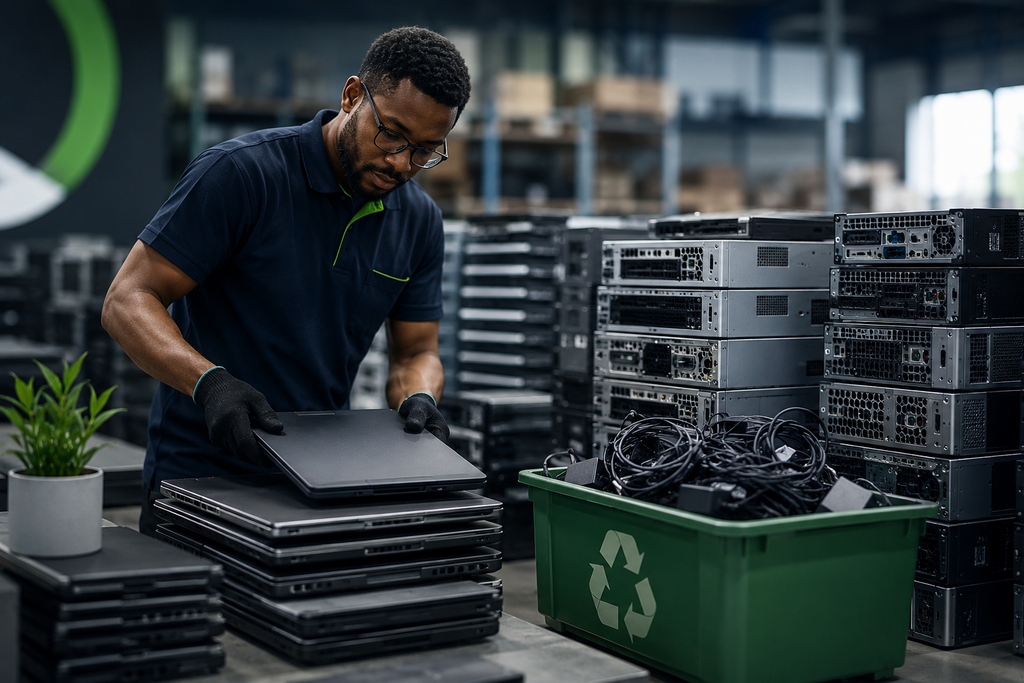
What Are You Doing With Your Retired Hardware?
By Daniela
GET ACCESS TO A CUSTOMIZED SUPPLY CHAIN FOR YOUR TECH EQUIPMENT
Check out our exclusive offers and updates!
That is why storage rooms, warehouses, and back offices quietly fill with unused IT hardware over time. Old laptops, switches, monitors, routers, desktops, and accessories begin piling up because nobody internally wants to deal with the next step.
Most companies already know this equipment exists. The challenge is that removing retired hardware feels like extra work, extra logistics, and extra cost. So the hardware stays where it is, taking up space while losing value every month.
According to the United Nations Global E-waste Monitor, the world generated more than 62 million metric tons of electronic waste in 2022, and less than a quarter of it was formally collected and recycled. That number continues growing every year as businesses accelerate hardware refresh cycles.
Why Retired IT Hardware Costs More Than Companies Think
Unused IT hardware may not look like an urgent problem, but it creates operational inefficiencies that add up quickly. Storage space becomes cluttered, inventory management becomes harder, and perfectly usable equipment loses value while sitting untouched.
For IT teams, retired hardware often becomes one of those problems that constantly gets pushed down the priority list. There is usually uncertainty around disposal, transportation, compliance, data handling, or whether the hardware still has value. As a result, companies end up holding onto equipment far longer than they intended.
The financial impact is larger than many businesses realize. Gartner estimates that organizations can recover significant value from retired IT assets through refurbishment, redeployment, or resale programs instead of immediate disposal. In many cases, the issue is not that the hardware is unusable. It is that nobody has created a practical process for handling it.
Most Retired Hardware Still Has Value
One of the biggest misconceptions around retired IT equipment is that “retired” automatically means “useless.” In reality, a large percentage of hardware still has operational value depending on its condition, age, and intended use.
Some equipment should absolutely be recycled responsibly at the end of its lifecycle. However, other devices can still support secondary operations, branch offices, testing environments, temporary deployments, or emerging markets where performance requirements may differ from large enterprise environments.
This is where companies often miss opportunities. Hardware that no longer fits one environment may still be extremely useful somewhere else.
At Dragon Sino, we help businesses handle retired IT hardware without turning the process into another operational burden. Instead of letting equipment sit unused, companies have multiple paths forward depending on the condition and purpose of the hardware.
Option 1: Responsible IT Hardware Recycling
Some hardware reaches the point where refurbishment no longer makes sense. Components fail, equipment becomes obsolete, or repair costs outweigh the remaining value. In these situations, responsible recycling becomes the best solution.
The problem is that many businesses assume recycling means complicated vendor coordination, disposal fees, and additional internal work for already overloaded teams.
Dragon Sino simplifies the process by retrieving retired hardware directly from businesses and managing the next step responsibly. Instead of allowing old equipment to continue occupying valuable space, companies can remove the operational headache while supporting proper electronic waste handling practices.
Example: Clearing Out Retired Office Equipment
A company completes a global laptop refresh for several hundred employees. The new equipment is deployed quickly, but the old laptops remain stacked in a storage room because nobody internally has time to coordinate removal and disposal.
Six months later, the company is still managing the same pile of equipment. Storage space is limited, asset tracking becomes more confusing, and the hardware continues losing value.
Instead of assigning internal resources to solve the problem, Dragon Sino retrieves the retired hardware and handles the process from there. The company regains space, simplifies operations, and removes the burden from the IT team.
Learn more about our global IT lifecycle services here:
Dragon Sino IT Lifecycle Services
Option 2: Refurbish and Extend Hardware Life
Not every device needs to be destroyed after a refresh cycle. In fact, extending hardware life is becoming increasingly important for businesses trying to reduce waste and control operational costs.
Extending the life of laptops and computers by just one additional year can significantly reduce carbon emissions associated with manufacturing new devices. That means refurbishment is not only financially practical. It also supports sustainability goals many organizations are already trying to achieve.
Many businesses replace hardware based on standard refresh schedules rather than actual performance limitations. As a result, large amounts of usable equipment are retired earlier than necessary.
Refurbished hardware can still support:
- Secondary teams
- Backup environments
- Training labs
- Temporary projects
- Smaller office deployments
- Emerging market operations
Example: Reusing Retired Networking Equipment
A company upgrades networking equipment across multiple sites to support new infrastructure standards. While the older equipment no longer fits the primary environment, many devices still function perfectly well.
Instead of disposing of everything, selected equipment is refurbished and redeployed in smaller branch locations where performance demands are lower. The company extends the life of the hardware, reduces unnecessary purchasing costs, and avoids generating additional waste.
The equipment continues creating value instead of collecting dust in storage.
Learn more about refurbished IT solutions for African markets through
Option 3: Turn Retired Hardware Into Opportunity
Sometimes retired hardware can do more than reduce waste or save operational costs. It can create opportunity for communities that still lack access to technology.
Across many parts of Africa, schools continue operating with limited access to computers, internet connectivity, and digital learning tools. Meanwhile, businesses around the world are storing equipment that may no longer meet corporate standards but still functions perfectly well.
That gap creates a real opportunity to extend the impact of retired hardware.
Through Tech On Hand, usable equipment can be refurbished and redirected toward schools and educational initiatives that need it most. Devices that once sat unused in storage can become tools that help students learn digital skills, access educational resources, and improve future opportunities.
Example: Supporting Schools With Retired Computers
A business retires several servers during a standard refresh cycle. The equipment no longer aligns with internal performance requirements, but many units remain fully functional.
Instead of paying to dispose of everything, part of the hardware is refurbished and prepared for educational use through Tech On Hand. Schools gain access to technology, students gain access to digital learning tools, and usable equipment stays out of landfills.
Learn more about how Tech On Hand supports schools in Africa here:
Why IT Hardware Lifecycle Management Matters More Than Ever
The traditional approach to IT hardware was simple: buy it, use it, replace it, and move on. That approach no longer makes sense in a world where sustainability, operational efficiency, and cost control are becoming increasingly important.
Modern businesses need to think about the full lifecycle of their technology, including procurement, deployment, retrieval, refurbishment, recycling, and redeployment. Companies that manage this process effectively reduce operational friction while getting more value from every hardware investment they make.
Retired hardware is not just old equipment sitting in storage. It represents unused value, wasted space, and missed opportunity when left unmanaged.
Extend the Life of Your Hardware
Most businesses already have retired hardware somewhere inside their operations. The difference is whether that equipment continues wasting space or becomes useful again.
Dragon Sino helps companies retrieve retired IT hardware and give it a new life through responsible recycling, refurbishment, and community support initiatives. Whether the goal is clearing storage space, extending hardware life, or supporting schools through Tech On Hand, businesses have more options than simply letting equipment sit forgotten in a warehouse.
Turn your IT hardware into opportunity instead of letting it become another operational problem.
Continue reading:
Refurbished Equipment is the Future and Here is Why
Solving Africa's E-Waste Problem: A Call to Action for the Tech Industry
How to Create the Right Technology Environment for Your Business
Share Article
Move IT equipment door to door ANYWHERE ANYTIME
Dragon Sino helps IT companies, SD-WAN providers, and data centers move equipment worldwide. With DDP, EOR, and IOR services, we handle customs and logistics for smooth, delay-free deliveries.