International deployments usually move fast until the hardware reaches Brazil. Then suddenly the rollout slows down. Equipment stops moving. Deployment teams lose visibility. Timelines slip. Clients begin asking questions. Internal teams start blaming logistics, procurement, or customs without fully understanding where the real issue started.

Why IT Hardware Keeps Getting Stuck in Brazil Customs
International deployments usually move fast until the hardware reaches Brazil. Then suddenly the rollout slows down. Equipment stops moving. Deployment teams lose visibility. Timelines slip. Clients b


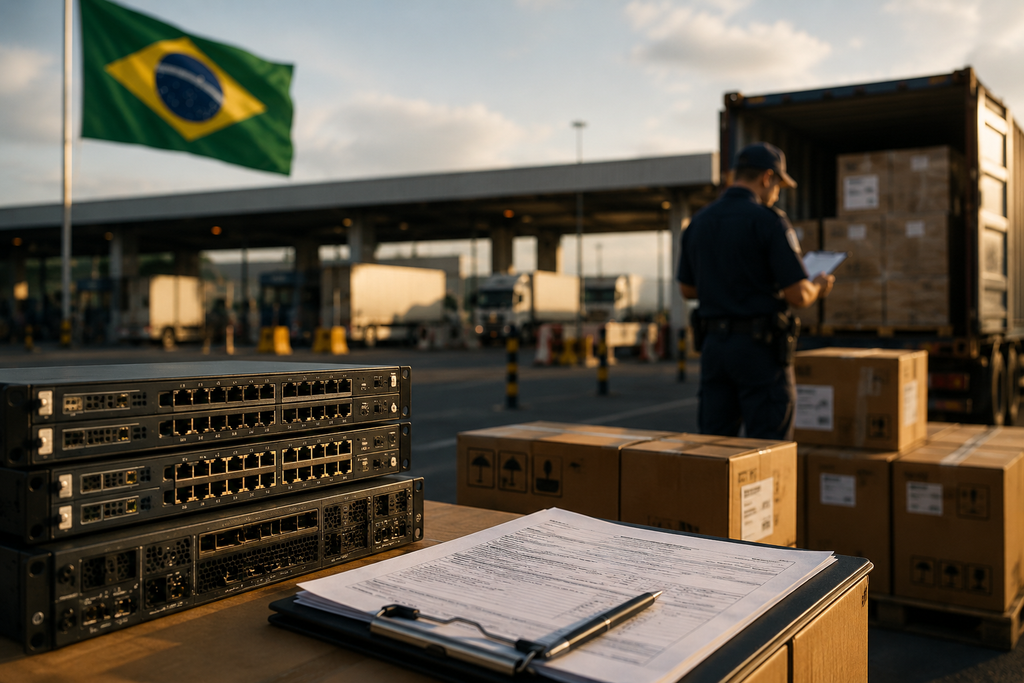
Why IT Hardware Keeps Getting Stuck in Brazil Customs
By Daniela
GET ACCESS TO A CUSTOMIZED SUPPLY CHAIN FOR YOUR TECH EQUIPMENT
Check out our exclusive offers and updates!
Many companies dealing with hardware stuck in Brazil customs initially assume the problem is transportation. The shipment arrived at the airport, the tracking says it landed, and from the outside everything appears to be moving normally. Then the deployment timeline begins slipping with no clear explanation.
In reality, the delay often starts long before the shipment reaches Brazil.
Brazil Has Complex Import Requirements for IT Hardware
Brazil has one of the most complex import environments for technology and infrastructure equipment in LATAM. Companies managing IT hardware import in Brazil often underestimate how many moving parts are involved once the equipment enters the country.
Unlike standard commercial goods, infrastructure hardware frequently falls under additional regulatory reviews, importer requirements, and technical classifications that can slow down the process significantly.
This becomes even more challenging for companies deploying:
- routers
- switches
- SD WAN appliances
- firewalls
- wireless infrastructure
- servers
- network infrastructure devices
The more specialized the equipment is, the more operational planning is usually required before the shipment even leaves origin.
Click here to ship hardware to Brazil smoothly
Many Infrastructure Teams Discover ANATEL Too Late
One of the biggest surprises for international infrastructure teams is ANATEL.
ANATEL, Brazil’s National Telecommunications Agency, regulates many types of telecommunications and networking equipment entering the country. Depending on the hardware being imported, certain devices may require certification, approval, or additional compliance checks before customs clearance can move forward.
Many organizations experiencing telecom equipment delayed Brazil do not realize ANATEL is involved until after the hardware is already sitting at customs.
This is especially common during:
- infrastructure rollouts
- SD WAN deployments
- network expansions
- data center upgrades
- multi-site hardware deployments
At that point, the issue is no longer just a shipment delay. It becomes a deployment problem affecting installation schedules, customer onboarding, engineering coordination, and regional rollout timelines.
Documentation and Customs Classification Create Major Delays
Another major issue involves customs classification and documentation accuracy.
Even small inconsistencies between invoices, serial numbers, product descriptions, or HS classifications can trigger additional inspections or reviews. Infrastructure teams dealing with network equipment customs Brazil operations often discover that generic product descriptions are not enough for customs authorities reviewing sensitive or regulated hardware.
Importer requirements also create unexpected bottlenecks.
Some companies assume they can simply ship hardware into Brazil without fully coordinating the local import process beforehand. In reality, importer registration requirements, tax structures, and local operational coordination can all impact whether equipment clears smoothly or remains delayed.
Why Brazil Customs Delays Become Operational Problems
This is one of the reasons Brazil customs delays become so operationally disruptive for international infrastructure projects.
The hardware may physically arrive in-country on time while the deployment itself remains blocked because one operational step was overlooked earlier in the process.
For companies managing aggressive rollout timelines, these delays quickly create pressure across multiple departments. Engineering teams wait for equipment, project managers lose deployment visibility, and clients begin questioning timelines without understanding the complexity happening behind the scenes.
This is also why searches related to:
- telecom customs clearance Brazil
- network equipment customs Brazil
- IT hardware import Brazil
- telecom deployment delays
continue growing as more infrastructure companies expand internationally.
Infrastructure Deployments Require More Than Shipping
This is where many companies realize the difference between moving hardware and managing infrastructure operations.
Brazil deployments require much more than transportation. They require coordination across the entire hardware lifecycle, from procurement and prestaging to customs clearance, deployment readiness, visibility, reverse logistics, and long-term infrastructure support.
At Dragon Sino, the focus is not simply getting boxes from one country to another. The goal is helping infrastructure teams keep deployments moving without losing operational visibility or control along the way. While some companies only focus on “easy” regions, Dragon Sino helps clients execute deployments in places where infrastructure rollouts become more complex, regulations become stricter, and local coordination becomes critical.
Successful infrastructure deployments are rarely determined by how fast the shipment moves. They are determined by how well the operation was prepared before the hardware ever shipped and how well every stage of the hardware lifecycle is managed once the deployment begins.
Get a quote within 48 hours and deploy where most providers hesitate.
Share Article
Move IT equipment door to door ANYWHERE ANYTIME
Dragon Sino helps IT companies, SD-WAN providers, and data centers move equipment worldwide. With DDP, EOR, and IOR services, we handle customs and logistics for smooth, delay-free deliveries.